


At IWT, we recognise that achieving consistent, compliant, and reproducible cleaning outcomes is critical within GMP-regulated environments. We work closely with pharmaceutical organisations to support robust Cleaning Out of Place (COP) strategies that align with both operational and regulatory requirements.
To provide further insight into this important topic, we’ve partnered with BPV Ltd, whose expertise in validation and regulatory compliance brings a valuable perspective to the design and implementation of parts washing systems.
In the following article, BPV Ltd explores the key principles behind parts washers, including system design, critical cleaning parameters, and the validation lifecycle approach, offering practical guidance for ensuring effective, compliant cleaning processes within modern pharmaceutical manufacturing.
Parts Washers - Cleaning Out of Place Systems
Parts washers are synonymous with the Pharmaceutical Industry where strict legislation and regulations require the implementation of cross contamination control strategies and measures to ensure all medicinal products are of the desired quality, identity, purity, strength, potency, safety and efficacy.
A parts washer offers a fully automated, efficient, robust and flexible clean out of place system that does not compromise on compliance, productivity, product quality or patient safety. They satisfy Regulatory requirements in accordance with EudraLex Vol 4 Annex 1, EudraLex Vol 4, Annex 15, Qualification and Validation and FDA 2011 Process Validation: General Process and Practices.
Because parts washers offer compatible and flexible cleaning solutions, they are suitable for a wide range of working industries from food and beverage, cosmetics, laboratories to cGMP pharmaceutical facilities.
Why Invest in a Parts Washer?
Parts washers are a significant investment requiring careful consideration during the design stage to ensure the most appropriate system is procured.
There are many advantages for selecting a parts washer, one of the most significant is the use of a compliant, readily validatable, reliable and effective automated cleaning process in substitution of manual cleaning processes, which are inherently high risk requiring robust cleaning operating procedures and training programmes.
The advantages of fully automated cleaning out of place systems are illustrated in Figure 1.
Types of Parts Washers
Manufacturers supply a wide range of COP (Clean Out of Place) systems from small lab-based glassware washers through to cGMP large cabinet style product contact parts washers, as shown in Figure 2.
All GMP parts washers are built to sanitary design with hygienic pipework pumps and valves which readily meet the stringent requirements required by ASME BPE -Bioprocessing Equipment .

Figure 1 illustrates the advantages for use of a parts washer.
There are a wide range of parts washer makes and models which can be modified to meet customer requirements, general modifications include:
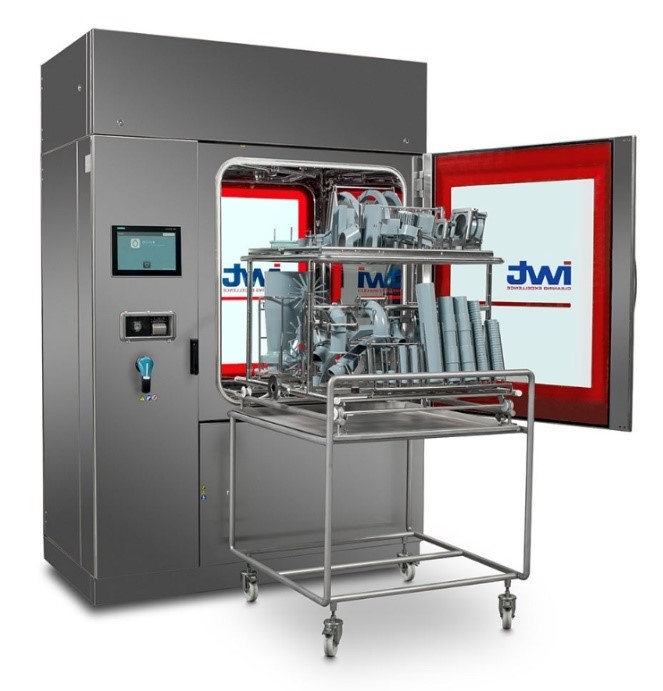
Figure 2 illustrates an example of a cGMP cabinet washer, IWT 200EVO.
Parts washer chambers provide a framework for automated cleaning. It is the use of optimally designed racks and baskets that ensures repeatable, robust and effective cleaning.
In addition to the parts washer itself, manufacturers offer a selection of racks and baskets that are either:
1) Modular design, which are fully configurable with interchangeable components.
2) Customised design for unique manufacturing equipment or loads that require a fixed load pattern.
Selection of these can be aided through 3D modelling and digital simulation trials during the design stage, which can demonstrate suitability of the design of racks and baskets using equipment supplied by the manufacturer prior to procurement. The cleaning efficacy of the racks can be tested at FAT and SAT using riboflavin coverage tests.
From Design to Validation
Pharmaceutical equipment and processes require documented evidence to demonstrate fitness for intended purpose, robustness, reproducibility and effectiveness for each and every use as described in EudraLex Volume 4, Annex 15, Qualification and Validation.
Using the FDA 2011 Guidance “Process Validation: general Principles and Practices in combination with ICH Q9 (R1) Quality Risk Management principles”, the validation effort can focus on high risk processes (to patient safety and product quality) rather than on low risk processes, which are time consuming but do not add value to the overall output of the validation activity.

Figure 3, Representation of the Validation Lifecycle Approach
The Validation Lifecycle approach is a holistic concept, which takes into consideration product, process development and qualification of the commercial manufacturing process. The process is not linear, it encapsulates opportunities to reflect on activities, to identify gaps or improvements before moving on to the next stage. The concept encourages continuous improvements and is represented as a lifecycle rather than a lifeline.
Parts washers have been designed and built using Quality by Design (QbD) principles, therefore Validation has been considered at the design stage.
Cleaning Cycles are designed to meet product Critical Quality Attributes using Critical Cleaning Parameters, otherwise known as TACT, which is often represented as 4 interlocking jigsaw puzzle pieces as shown in Figure 4:

T - Temperature of rinse water, cleaning agents and drying cycle (if applicable).
A - Agitation, mechanical agitation of the water spray on equipment surfaces.
C - Chemical – pH, cleaning agent type, mode of action, rinseability, solubility, product type, pH, solubility, and rinseability.
T - Time of rinses, inter-rinses, cleaning agent contact, rinse pulses and final rinse and drying (if appropriate).
Figure 4, TACT relationship
The relationships between the Critical Cleaning Parameters (CCPs)are well described in Cleaning Validation guidance such as ISPE “Lifecycle Approach to Cleaning Validation”, PDA TR29 “Points to Consider for Cleaning Validation” and TR49 “Points to Consider for Biotechnology Cleaning Validation”.
The FDA 2011 Process Validation: General Process and Practices and the updated PDA TR60 Process Validation: A Lifecycle Approach, define the framework and relationships between the three stages of validation and processes or products. from inception to obsoletion/retirement.
The validation lifecycle approach is holistic, drawing together product and process validation with ICH Q8, Q9 and Q10 principles. The objective is to identify, mitigate and eliminate risks to acceptable levels.
Additionally, the lifecycle approach encourages the principle for continuous improvements, thus creating a validation continuum.
The validation lifecycle approach is easily applicable to parts washers, which are designed and built within the Quality by Design principles, as shown in Figure 5 illustrates the relationship between the lifecycle approach and validation activities.

Figure 5 provides an overview of a range of processes and deliverables required to validate a parts washer within a GMP setting, using 3 overarching validation stages:
The lifecycle approach enables validation activities to be revisited to optimise cleaning processes, load patterns, equipment and products allowing for greater flexibility to introduce process improvements with relative ease using change control and risk management principles to evolve proactively.
Parts washers are so adaptable, any changes that impact their use can be implemented using the same approaches and these changes can be monitored and trended to demonstrate effectiveness.
Summary
Parts washers are a great investment; they reduce risk to product quality and patient safety whilst reducing equipment downtimes and costs. Whilst inherently increasing assurance of equipment cleanliness, cleaning process effectiveness, reproducibility and robustness, productivity, product quality and patient safety.
They offer flexibility to end users, offering solutions to wide ranging business types, models and requirements.
When applied, the Validation Lifecycle approach and ICH Q9(R2) Risk Management approaches streamline procurement, design, installation, commissioning and qualification of a parts washer, meaning that validation and equipment released for commercial use is performed in a timely manner.
When investing in a GMP Parts Washer, GMP Bin Washer, or any major capital equipment, choosing a supplier with strong project management support is critical to a successful installation and long-term performance. An experienced project manager acts as your single point of contact, ensuring the equipment is delivered exactly to specification, your facility is fully prepared, and all utilities are in place and compliant. They also oversee validation, guaranteeing the system passes Site Acceptance Testing, Installation Qualification, and Operational Qualification smoothly and on schedule minimising risk, delays, and unexpected costs.
Equally important is robust after-sales service support. A GMP parts washer is a mission-critical asset and must be backed by responsive local technical service and a well-stocked spare parts hub. This ensures the equipment is maintained to manufacturer specifications, operates reliably, and any issues are resolved quickly to protect uptime and compliance.
A dedicated local helpdesk adds another layer of assurance, pre-diagnosing issues before an engineer arrives on site. This means faster resolutions, first-time fixes, and minimal disruption to your operation, maximising productivity and safeguarding your investment.
Author: Amanda Barton-Skeates, BPV Limited


 UK
UK CORPORATE
 ITALY
ITALY FRANCE
 GERMANY
 CHINA
CHINA